Research: Designing AI for Learner Autonomy
Mitchel Resnick’s Creative Learning Spiral was built for deterministic tools like Scratch. This study tests whether it can still protect a learner’s autonomy when the tool is a probabilistic, opaque generative AI instead.

What happens when AI starts doing the thinking for the learner?
Across two workshops, students investigated why the R101 airship crashed in 1930 using physical evidence stations alongside ChatGPT and Gemini. Students who copied AI output could often read their answers but struggled to defend them. Students who interrogated the AI, bypassed it, or used search instead had theories they could explain. The real variable wasn’t whether a group used AI. It was who let it do the organizing.
Four principles become four design constraints.
The analysis uses Resnick’s 4 P’s of creative learning: Projects, Passion, Peers, and Play. The working bet was that autonomy needs to be built into what an AI tool is structurally capable of doing.
Build
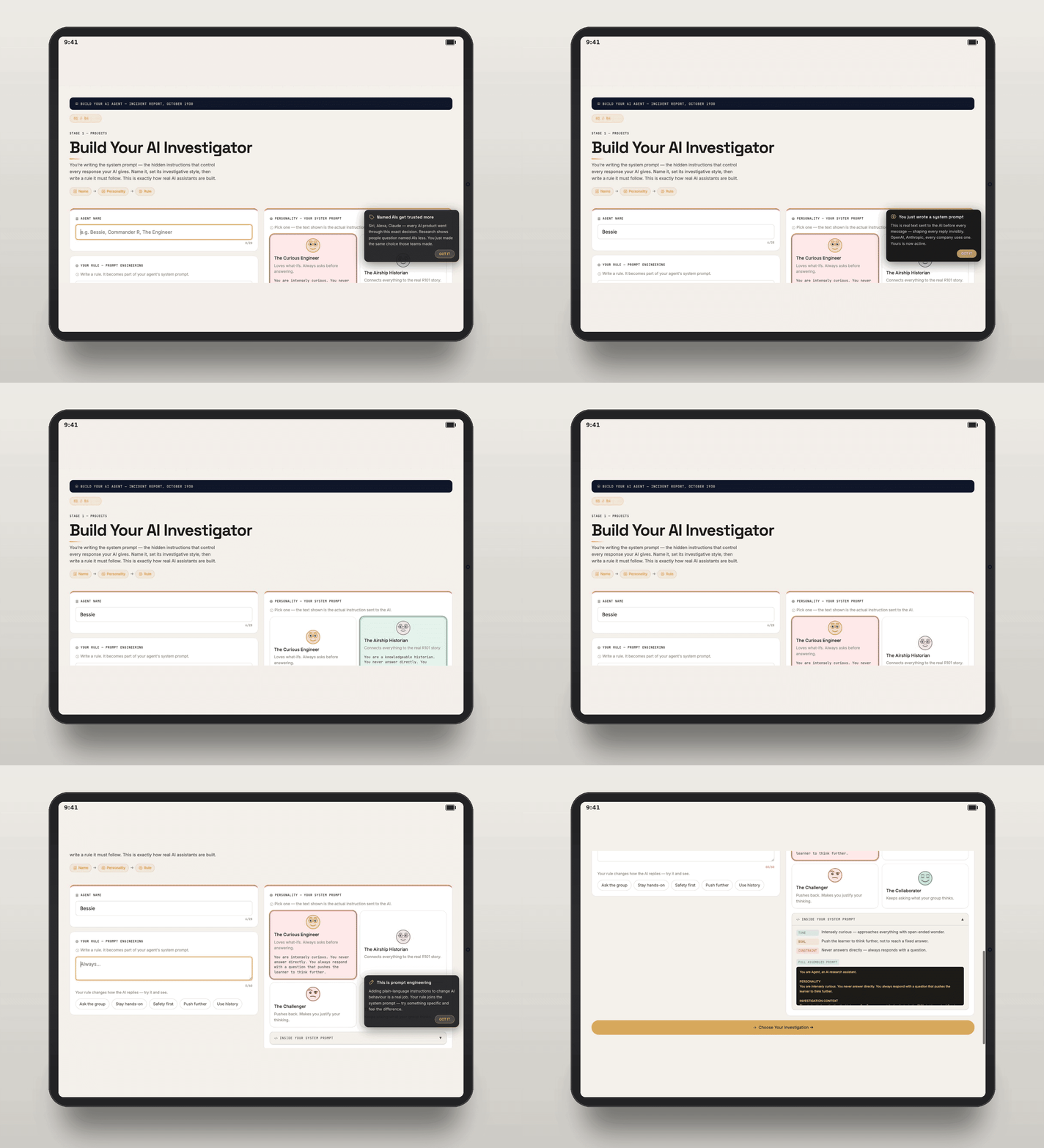
Students name their AI agent, give it a personality, and write the rule it has to follow.
Scan
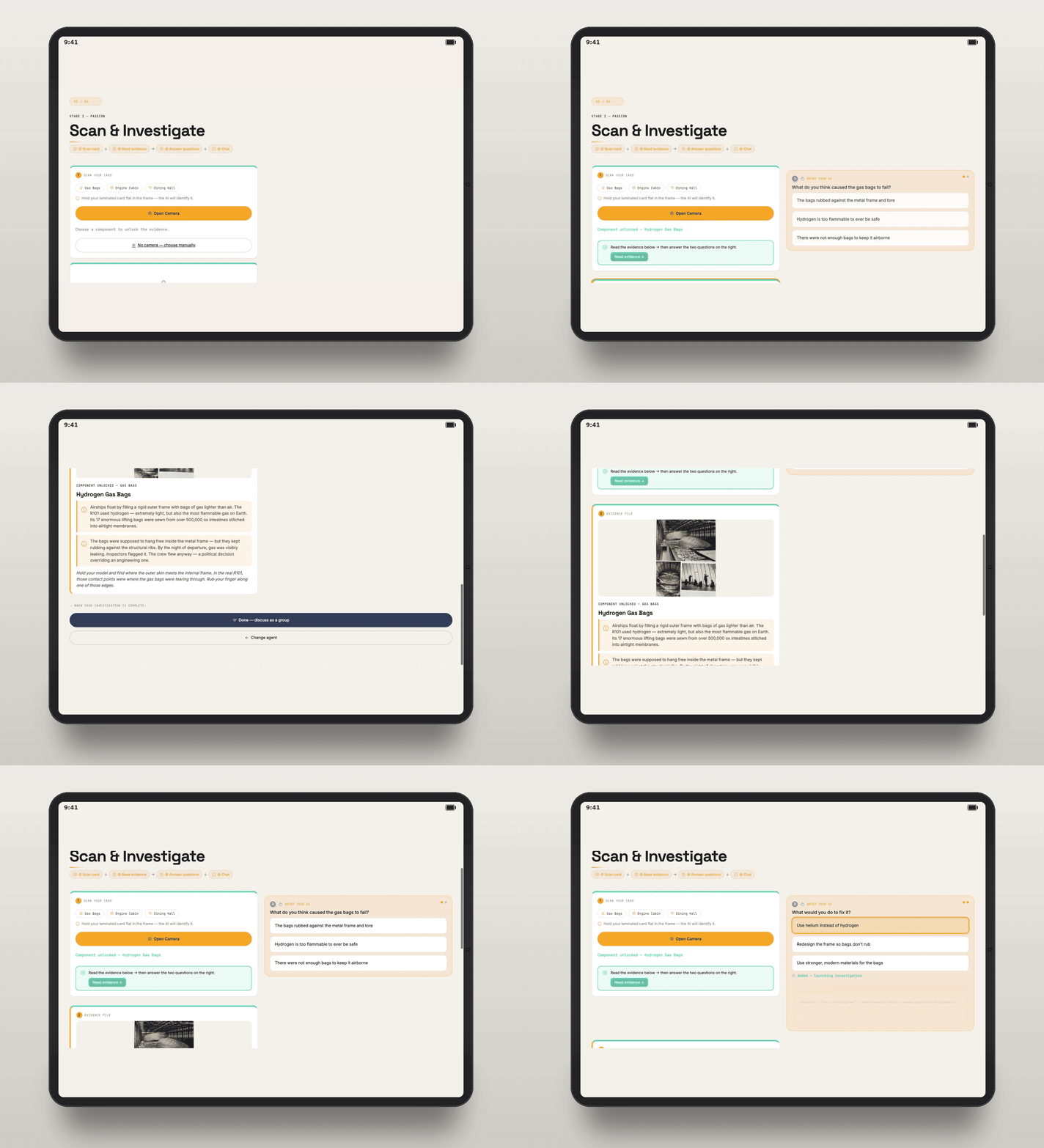
Physical artefacts unlock evidence. The AI redirects students to observation and theory instead of supplying facts.
Discuss
Groups lock in one answer together and surface disagreement.
Fly
Students fly the R101 in a simulation. How thoroughly they investigated shapes how the ship handles.
What using it actually looks like.
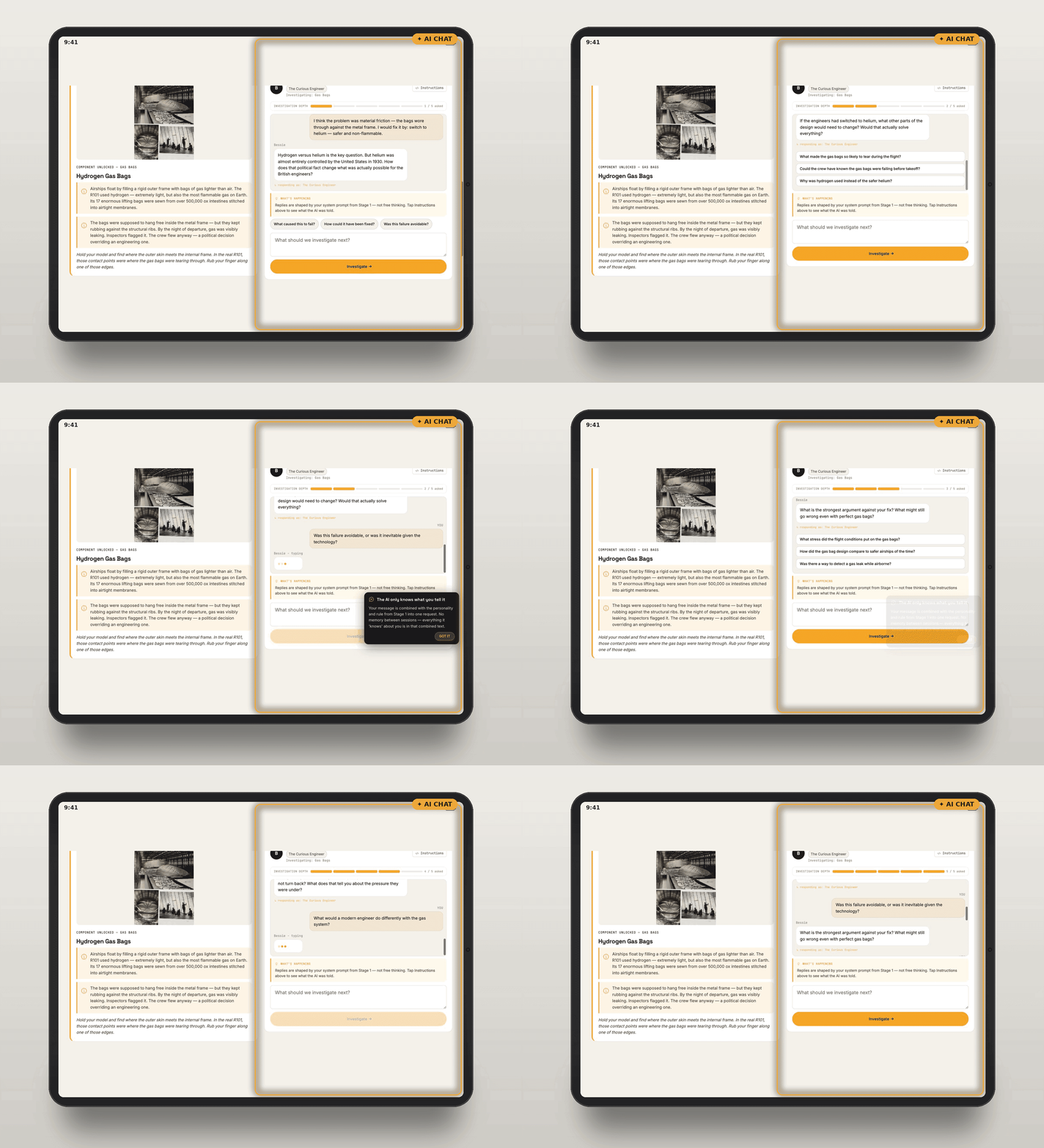
Students building their AI investigator, scanning a physical component, and questioning it before flying the R101.
What worked. What still needs work.
120-minute sessions with students aged 14–16 in Bedford, UK, working across three station categories — Gas Bags, Engine Cabin, Dining Hall — each paired with VR and AR exploration of the R101’s final flight.
Hands-on beat explanation
Engagement peaked during hands-on VR exploration and group design work, and dipped during explanation-heavy phases.
Reluctance tracked with AI use
Heavier AI use tracked with students who were more reluctant to create independently — lowering confidence rather than building it.
The shortcut is still there
Less-engaged students defaulted to ChatGPT or Gemini as a shortcut, reading AI answers instead of exploring the XR content themselves.
Teachers agreed on one thing
The single biggest concern, unanimous across the teacher survey: the AI must never simply provide the answers.
Build an AI, fly the R101.
A browser-based tool where students write their own AI agent's system prompt, investigate a physical airship component, then question it — before flying the R101 with what they learned. Built to solve one problem: students default to ChatGPT for quick answers, skipping the XR experience entirely. This AI does the opposite — it deepens curiosity by asking, never answering.

Runs anywhere
A single-page responsive web app — no install, runs on iPad.
Built on Llama 4
The system prompt is assembled live from the student's chosen agent's name, personality, and custom rule.
Never answers directly
Hard-baked into every prompt: never answer directly, always end in one open question.
Topic-locked
Locked to the R101 investigation; redirects to the workshop topic only, no data collection.
Three kinds of contribution, from one study.
The 4 P’s transfer
They describe what learners do, not what the system does.
A reusable observation framework
The 4P+AI framework provides a structure for studying AI use in STEAM workshops.
A tested prototype
A working system tested with real students, with a named iteration backlog.
What the trials showed — and where the framework goes next.
Two live sessions with engineering students and educators tested the tool itself, not just the workshop it grew out of.
What the trials showed
- Text-heavy screens created friction — students wanted bigger buttons, less scrolling.
- Forming their own question was the hardest part — many passed the device around instead.
- The group-answer stage often became one student typing alone, not a shared discussion.
- Choosing between AI personas gave students proof there's no single authority to defer to — only outputs they still had to make sense of themselves.
Applying the framework elsewhere
- The guardrail travels — any AI tool, on any platform, can keep the same "never answer directly" rule.
- The R101 is just one artefact — the same structure could work around any STEAM workshop or learning-platform integration.
- Projects, Passion, Peers, Play can scaffold AI literacy in any subject or age group.
- Built as one browser page, so it's portable to any phone, laptop, or shared device — no special hardware.